Outback Online: How Remote Australia Found Its Own Wild at the Reels
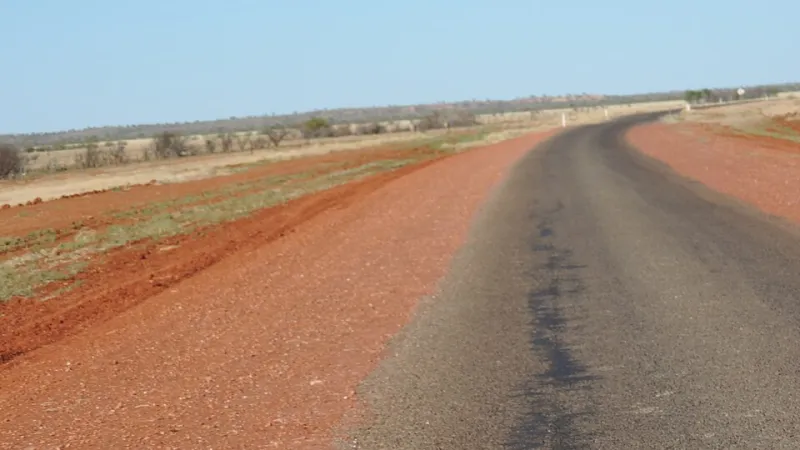
Photo: Kerry Raymond, CC BY 4.0, via Wikimedia Commons
It's 11:47pm on a Tuesday in a small town four hours east of Newman, WA. The nearest pub closed two years ago. The closest city is a six-hour drive on a road that gets properly sketchy after rain. But in a donger on a remote mine site, a FIFO worker named Davo is three hours into an online slots session, headphones in, cold can beside him, completely in his element.
This isn't an anomaly. Across regional and remote Australia — from the Pilbara to the Channel Country, from Cape York to the Nullarbor — a quiet but significant shift has been underway. Online casinos have become a genuine entertainment pillar in communities that the mainstream leisure industry largely forgot.
And the way these players engage? It's different. Shaped by distance, connectivity constraints, and a lifestyle that has its own rhythms entirely.
The Entertainment Vacuum That Online Gaming Filled
To understand why online casinos have taken hold so strongly in remote Australia, you have to understand what isn't there. No multiplex cinemas. No late-night restaurants. Pubs that close early, if they exist at all. Live sport is something you watch on a screen from thousands of kilometres away.
For a lot of regional and remote Aussies, entertainment is something that comes through a device. Streaming, gaming, social media — these aren't luxuries out here, they're the primary connection to a broader world. And online casinos slot neatly into that ecosystem.
"There's not a lot to do after knock-off," says Karen, who lives in a small Queensland town about 300 kilometres from the nearest regional centre. "I started playing online a couple of years ago just for something different. Now it's just part of how I wind down."
That sentiment — online gaming as a legitimate leisure activity rather than a vice or an indulgence — comes up again and again when you talk to players in remote communities. The social stigma that might exist in urban contexts carries less weight when the alternative is staring at the same four walls.
The Midnight Economy
Here's something that doesn't show up in the data but is immediately obvious when you talk to remote players: the timing is completely different.
In metro areas, peak gaming hours roughly mirror peak leisure hours — evenings, weekends, the occasional lunch break. But in remote and regional Australia, the clock operates differently. FIFO rosters mean days off fall on random weekdays. Night shift workers are wide awake at 2am and looking for something to do. Agricultural workers have intense seasons followed by long stretches of relative quiet.
The result is a genuinely different usage pattern. "I play late because that's when I'm not working and not sleeping," explains Marcus, a 38-year-old who does contract work on stations in the NT. "Midnight to 2am is basically my prime time. It's quiet, there's no interruptions, and honestly the sessions feel more focused."
This midnight economy of remote gaming has created players who are, in some ways, more deliberate about their sessions. When you're playing because you've carved out a specific window, you tend to be more intentional about it.
Connectivity Shapes Strategy
If there's one thing that distinguishes remote Australian players from their metro counterparts, it's their relationship with connectivity. Mobile data is often the only option — NBN fixed wireless that drops out in storms, satellite connections with latency that makes live dealer games frustrating, prepaid data plans that require careful management.
This has done something interesting to how remote players approach online gaming. They've become tactically savvy in ways that players with unlimited fibre broadband never need to be.
"I know exactly which games run well on a weak signal," says Davo, the FIFO worker from WA. "Anything with heavy animations or live streaming, I avoid on site. Slots are my go-to because they work even when the connection's being ordinary."
This practical constraint has, somewhat counterintuitively, created a cohort of players who know the technical side of online gaming better than most. They've learned what works, what doesn't, and how to get the most out of sessions when the stars of bandwidth aren't perfectly aligned.
Community in Unlikely Places
One of the most surprising findings when you dig into remote gaming culture is how social it is — despite the physical isolation.
Online casino communities, forums, and social media groups have become genuine social spaces for remote players. Sharing big wins, commiserating over cold spells, swapping tips about which games are running hot — these conversations happen in WhatsApp groups, Reddit threads, and Discord servers that connect players across thousands of kilometres of red dirt and scrub.
"There's a group of us from different mine sites who all play," says Karen. "We've never met in person but we talk almost every day about gaming. It's become a real friendship."
This is the digital campfire — a gathering point for people who are physically separated but share a common interest. And in communities where social connection can be genuinely hard to come by, it matters more than it might in a city where you can just walk to a mate's place.
A Different Kind of Player
What emerges from all of this is a portrait of a player type that the industry doesn't always account for: the remote Australian, shaped by distance, resourcefulness, and a lifestyle that doesn't conform to urban templates.
They're patient. They've learned to work with imperfect conditions. They value their gaming time because it's genuinely carved out from a demanding life. And they've built communities around shared experience in ways that would impress any community manager.
The wildcard element of remote Australian gaming isn't just in the spins — it's in the whole context. Playing from a camp stretching across the Pilbara, or a homestead somewhere in western Queensland, or a small town where the nearest casino is a five-hour drive away, these players have found something genuinely theirs in the digital frontier.
Australia has always been a country that rewards the people willing to go to the edges of the map. Turns out, that's just as true in online gaming as it is in everything else.